
What Parents Should Know About Competency-Based Learning Under NEP

Top-Rated School in Bangalore: What Truly Makes Sristi Global School Stand Out
April 28, 2026
How Schools Are Balancing Technology, Discipline, and Emotional Growth
May 25, 2026
Competency-Based Learning Under NEP is not just another education reform—it represents a fundamental shift in how children learn, grow, and prepare for real life. For parents, this change can feel both exciting and confusing. If schools are moving away from rote learning, memorisation, and marks-driven success, what exactly replaces them? And more importantly—how does this impact your child on a day-to-day basis?
This blog breaks down competency-based education in NEP 2020 in a practical, parent-friendly way—without jargon—so you understand what’s changing, why it matters, and how you can support your child.
What Is Competency-Based Learning Under NEP (In Simple Terms)?
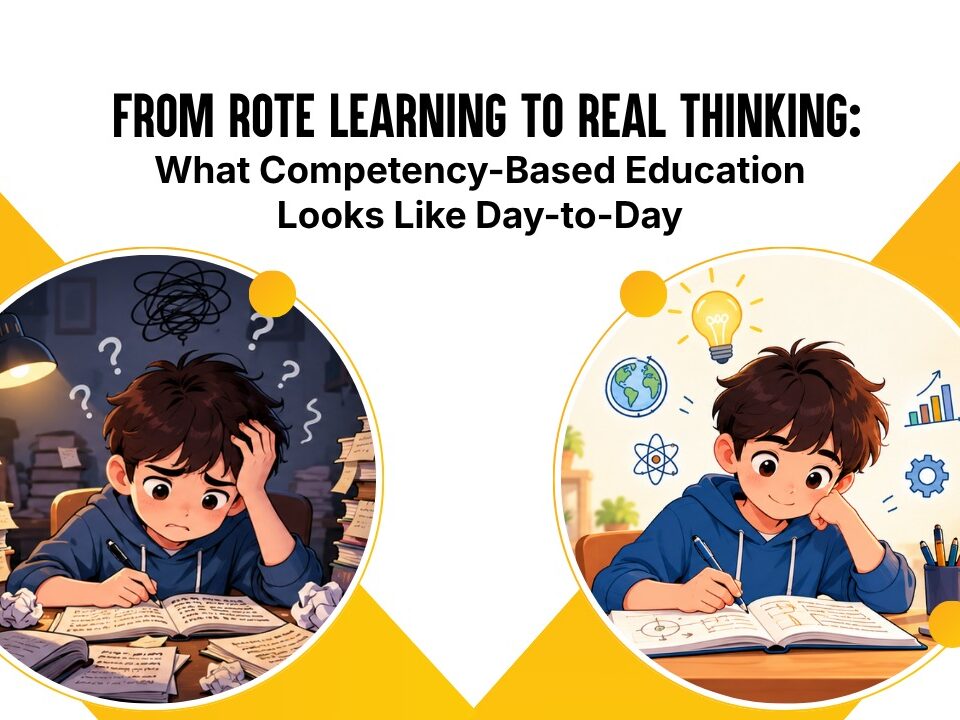
Competency-Based Learning Under NEP focuses on what a child can actually do with what they know, rather than how much they can memorise.
Instead of asking: “Can my child reproduce the answer?”
The system now asks: “Can my child understand, apply, analyse, and explain the concept?”
Under this model, learning is measured through:
- Understanding concepts
- Applying knowledge in real situations
- Problem-solving and critical thinking
- Communication and collaboration
This is the backbone of competency based education in NEP 2020.
Why NEP Shifted to Competency-Based Education:
India’s National Education Policy recognised a key issue:
Students were scoring well—but struggling with application, adaptability, and independent thinking.
The NEP shift aims to:
- Reduce rote memorisation
- Build thinking and reasoning skills
- Prepare students for unpredictable future careers
- Align Indian education with global standards
This is why competency-based learning for school students starts right from early grades—not just higher classes.
What Changes Will Parents Notice in the Classroom?
Many parents expect NEP to “look different” only in board exams. In reality, the biggest changes happen inside everyday classrooms.
You may notice:
- Fewer textbook-driven lessons
- More discussions, projects, and activities
- Open-ended questions instead of one correct answer
- Assessments based on understanding, not speed
This doesn’t mean academics are diluted—it means learning goes deeper.
How Assessment Works Under Competency-Based Learning:
One of the biggest shifts under Competency-Based Learning Under NEP is how children are assessed.
Instead of relying heavily on:
- Annual exams
- Marks as the sole indicator
Schools now use:
- Continuous assessments
- Observations and feedback
- Project work and presentations
- Skill-based evaluation
The focus is on progress over perfection.
Key Skills Children Develop Through Competency-Based Learning:
Competency-based education isn’t abstract—it builds very real skills that parents want for their children.
These include:
- Critical thinking and reasoning
- Clear communication
- Emotional intelligence
- Decision-making
- Creativity and innovation
These are the skills colleges and employers globally value—making competency-based learning for school students future-ready.
Common Parent Concerns (And What You Should Know):
“Will my child fall behind academically?”
No. In fact, children often develop stronger conceptual clarity and retain knowledge longer.
“What about exams and competitive tests?”
Competency-based learning builds the foundation needed to perform better, not worse, in exams that require application and logic.
“Is this suitable for all learners?”
Yes. This approach respects different learning styles and reduces unnecessary academic pressure.
How Parents Can Support Competency-Based Learning at Home:
Understanding how parents can support competency-based learning is critical—because NEP success depends on school–parent alignment.
Here’s what actually helps:
1. Encourage Questions, Not Just Answers:
Ask “Why do you think so?” instead of “What’s the right answer?”
2. Value Effort and Thinking:
Praise problem-solving, creativity, and curiosity—not just marks.
3. Connect Learning to Real Life:
Relate school concepts to daily activities, conversations, and decisions.
4. Reduce Comparison:
Competency-based growth is individual. Avoid comparing progress with others.
The Role of Schools in Making NEP Work:
Not all schools implement NEP in the same way. The real difference lies in how intentionally the framework is applied.
Forward-thinking schools:
- Train teachers continuously
- Redesign lesson plans around competencies
- Communicate clearly with parents
- Balance structure with flexibility
This is where schools like Sristi Global School stand out—by translating NEP principles into meaningful classroom practices rather than surface-level changes.
Why Competency-Based Learning Is a Long-Term Advantage:
Competency-Based Learning Under NEP prepares children not just for the next grade—but for:
- Higher education
- Career adaptability
- Independent thinking
- Lifelong learning
In a world where careers evolve rapidly, learning how to learn matters more than memorising content.
Conclusion: What Parents Should Take Away
Competency-Based Learning Under NEP is not about removing discipline or academic rigor—it’s about making learning more relevant, human, and future-focused.
When implemented well:
- Children understand better
- Stress reduces
- Confidence increases
- Skills grow alongside knowledge
At Sristi Global School, competency-based education is approached with clarity, care, and commitment—ensuring that NEP is not just a policy change, but a meaningful learning transformation for every child.
FAQs: Competency-Based Learning Under NEP
1. What is Competency-Based Learning Under NEP in simple words?
It focuses on what students can do with their knowledge, not just what they can memorise.
2. How is competency-based education in NEP 2020 different from traditional learning?
Traditional learning focuses on exams and recall; competency-based learning focuses on understanding, application, and skills.
3. Will marks and exams be completely removed?
No. Exams still exist, but they are complemented with continuous and skill-based assessment.
4. How can parents support competency-based learning effectively?
By encouraging curiosity, reducing pressure on marks, and connecting learning to real-life experiences.
5. Is competency-based learning suitable for younger students?
Yes. In fact, early exposure helps children build stronger thinking and learning habits.




1 Comment
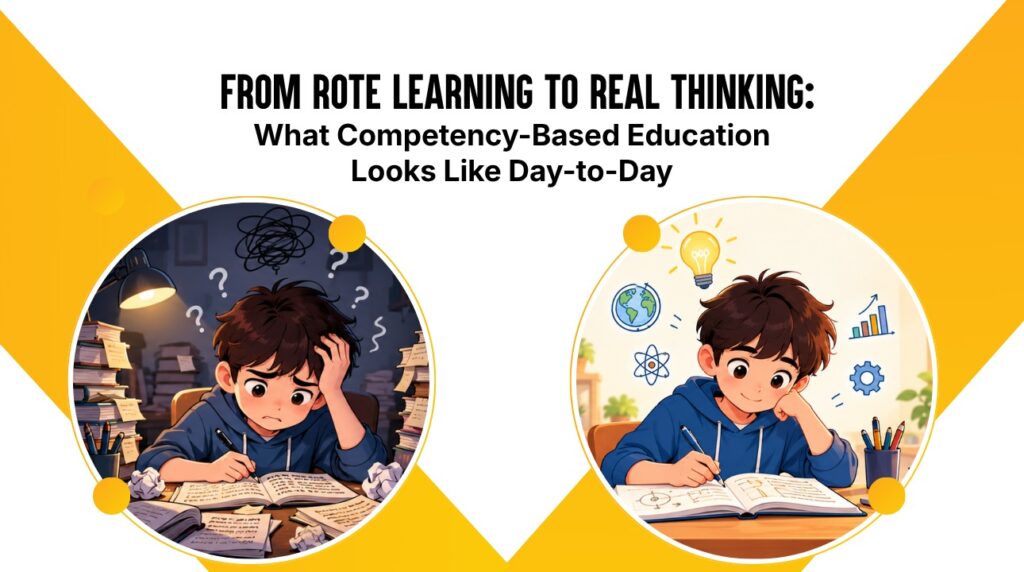
[…] Competency-based education shifts the focus from how much information a student can remember to what they can actually understand, apply, analyse and communicate. Learning is no longer complete simply because a chapter has been taught. The real question becomes: Can the student use what they have learned? […]