Beyond the Brochure: 10 Questions to Ask on Every School Campus Tour

From Rote Learning to Real Thinking: What Competency-Based Education Looks Like Day-to-Day
September 18, 2026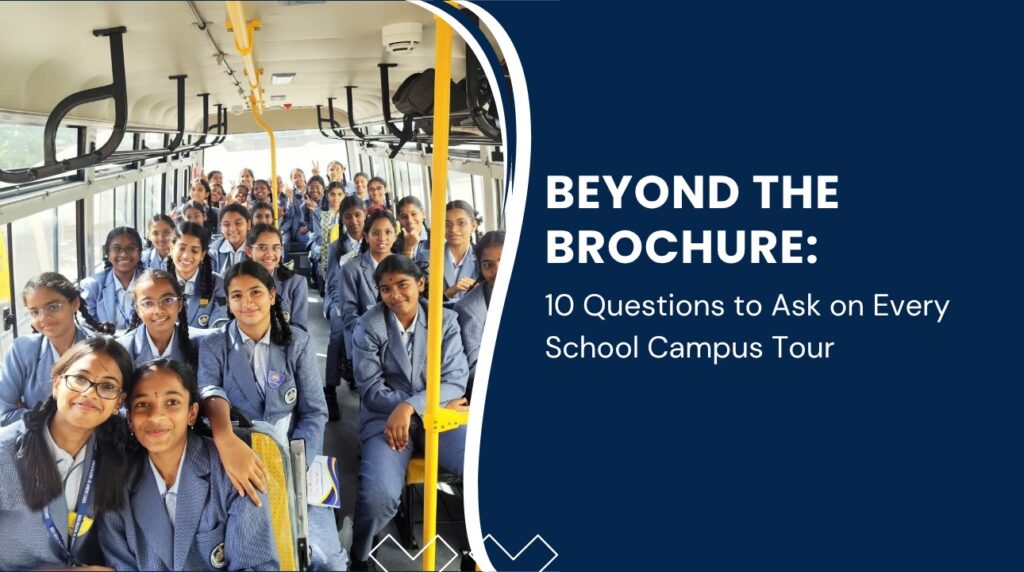
A school campus can impress you in 20 minutes.
Bright classrooms. A well-stocked library. Smart boards. Sports facilities. Colourful activity spaces. Confident presentations about academics and extracurricular activities.
But your child isn’t going to school for a 20-minute tour.
They are going to spend hundreds of days there.
They’ll have days when they don’t understand a lesson. Days when they feel left out. Days when they make mistakes, lose confidence, get into an argument with a friend or discover something they’re unexpectedly good at.
And those are the moments a brochure cannot show you.
Choosing a school isn’t simply about finding impressive facilities. Parents are really trying to answer a much harder question:
“Will my child be understood, supported and encouraged to grow here?”
That’s why the right questions to ask on a school tour should uncover what happens during an ordinary, imperfect school day.
Here are 10 questions worth taking with you on your next campus visit.
1. “If My Child Doesn’t Understand a Concept in Class, What Happens Next?”
Imagine your child understands multiplication but repeatedly struggles with division. The class, meanwhile, is ready to move ahead.
What happens?
Does the teacher notice? Is the concept explained differently? Is additional support available? How is the parent informed?
Instead of asking only about teacher-student ratios, ask the school to walk you through this exact scenario.
A useful follow-up is:
“Can you give me an example of how a teacher recently supported a student who was falling behind?”
Specific examples reveal much more than “We give individual attention.”
This deserves a place near the top of every parent’s school tour checklist.
2. “What Would My Child Actually Be Doing During a Normal Lesson?”
Don’t just ask, “Do you offer activity-based learning?”
Almost every school can say yes.
Try:
“If I walked into a Grade 4 science or maths class tomorrow, what might I see the children doing?”
Are students mainly listening and copying? Or are they discussing, experimenting, solving problems, asking questions and applying concepts?
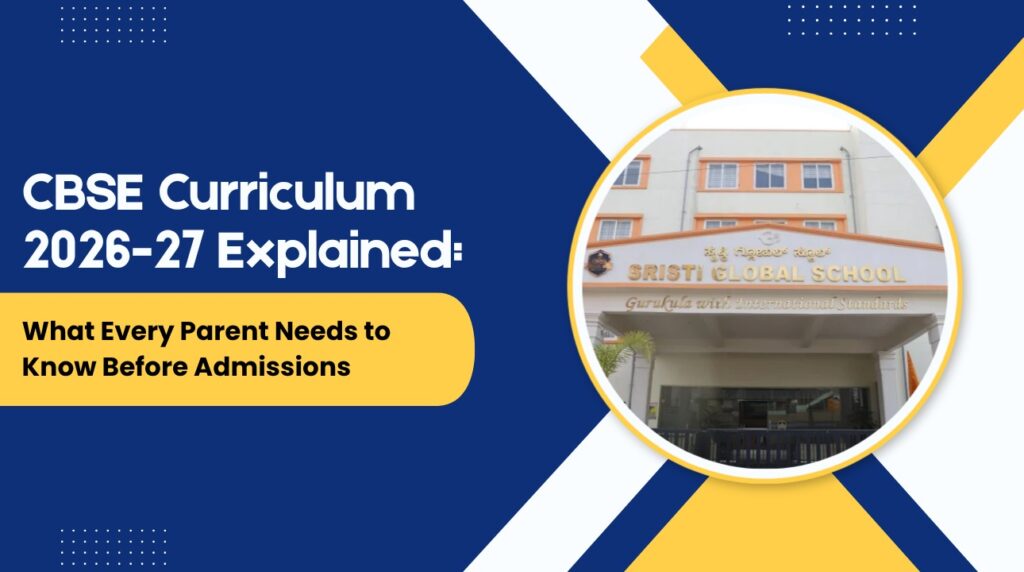
At Sristi Global School, the school’s educational approach places emphasis on experiential learning alongside academics. During your visit, ask to see examples of how that philosophy translates into classroom experiences.
The difference between a philosophy on paper and a practice in the classroom is worth understanding.
3. “What Happens When a Child Is Quiet but Doing Fine Academically?”
This is one of the most overlooked school admission questions.
Not every child who needs attention is struggling with marks.
Imagine a child who completes every assignment, scores well, and never causes trouble—but rarely raises their hand, avoids group activities, and doesn’t seem to have close friends.
Would anyone notice?
Ask:
“How do teachers identify children who may be socially or emotionally withdrawn even when their academics are fine?”
A school should ideally know children beyond their report cards.
4. “How Do You Handle Conflict Between Two Students?”
Children disagree. Friendships change. Someone gets excluded from a group. Teasing can go too far.
“No bullying is tolerated” sounds reassuring, but parents need to know what actually happens next.
Give the school a scenario:
“Suppose my child comes home three days in a row saying the same classmates are excluding or teasing them. What happens from the moment I report it?”
Ask who investigates, how teachers speak to the children involved, when parents are contacted, and what follow-up takes place.
You’re not looking for a school where children never have conflicts—that’s unrealistic.
You’re looking to understand how adults respond when they do.
5. “If My Child Makes a Mistake, How Will a Teacher Respond?”
Picture this:
Your child confidently gives the wrong answer in front of the class.
What happens next can shape whether they raise their hand tomorrow.
Ask how teachers respond to mistakes during lessons. Are students simply corrected, or encouraged to examine how they reached the answer?
A classroom where children can safely say “I don’t understand” can be just as important as one where they know the correct answer.
When considering the 10 questions to ask during a school campus tour, this one gives parents valuable insight into classroom culture.
6. “How Will I Know How My Child Is Really Doing?”
A report card gives you numbers.
But numbers don’t always tell you whether your child is curious, hesitant, improving, distracted, collaborating well or struggling with a particular skill.
Ask:
“Apart from report cards and scheduled parent meetings, how do teachers communicate meaningful changes in a child’s progress?”
Then make it real:
“If my child suddenly becomes less engaged for two or three weeks, when and how would I hear about it?”
Good parent-school communication shouldn’t begin only when a problem becomes serious.
7. “What Does Safety Look Like During the Messy Parts of the Day?”
Schools naturally talk about safety infrastructure. Parents should also ask about safety during transitions.
Think about the moments when children are moving rather than sitting in classrooms:
Morning arrival. Lunch break. Washroom visits. Playground time. Boarding the school bus. Dispersal.
Ask:
“Who supervises children during breaks, transitions, and dispersal?”
And:
“If my child is supposed to board the school bus but doesn’t reach it, what is the protocol?”
Sristi Global School highlights measures and facilities including CCTV surveillance, an infirmary, fire-safety provisions, and transportation. Parents touring Sristi Global School can use the visit to understand how these systems work in everyday situations—not simply whether they exist.
8. “What Opportunities Will My Child Have Outside Their Strongest Subject?”
Your child may be brilliant at mathematics and nervous about public speaking.
Or love drawing but hesitate to participate in sports.
School should not only strengthen what a child already does well. It should create safe opportunities to explore what they haven’t discovered yet.
Ask:
“How do you encourage a child to participate in something they’re hesitant to try?”
This is especially useful when looking at activities beyond academics.
Sristi Global School presents learning across areas including communication, science and technology, fine arts, environmental awareness, sports, yoga, and other developmental experiences. A campus tour is a good opportunity to ask how frequently students actually participate in these areas and whether opportunities extend across age groups.
9. “What Does Homework Look Like on a Regular Week?”
This question can save parents quite a few surprises later.
Don’t stop at “How much homework do you give?”
Instead, ask:
“Could you show me an example of the homework a student in my child’s grade received last week?”
Now you can see whether homework primarily involves repetition, unfinished classwork, independent thinking, reading, projects, or practical application.
Also ask how the school handles a child who regularly spends far longer on homework than expected.
Homework affects the entire family’s routine, so understanding expectations before admission matters.
10. “Can I See What an Ordinary School Day Looks Like—not Just the Highlights?”
This may be the most revealing question on your school tour checklist.
Annual days, competitions, and special projects show what a school can achieve at its best.
Parents also need to understand a normal Wednesday.
Ask to see student work, notebooks, classroom displays, or age-appropriate examples of recent activities.
You could ask:
“Can you show me something students worked on this month and explain what they were expected to learn from it?”
That simple question can reveal how academics, creativity, application, and assessment come together.
Don’t Leave the Campus Without Asking Your Child One Question:
Parents understandably spend a school tour evaluating everything.
But someone else is evaluating the school too—your child.
Once the tour is over, resist asking:
“Did you like the school?”
That’s too easy to answer with yes or no.
Instead, try:
“Where in that school could you imagine yourself spending time?”
Their answer might surprise you.
Perhaps they’ll mention the science lab you barely noticed. The playground. A classroom. The library. An art space. Or even the teacher who stopped to speak to them.
Children notice things adults sometimes miss.
Your School Tour Checklist Should Help You See Beyond the Presentation:
There is no single question that can tell you whether a school is right for your child.
But there is a major difference between asking:
“Do you provide individual attention?”
and
“What happens when my child hasn’t understood the same concept after it has been explained twice?”
One invites a brochure answer.
The other invites evidence.
That’s the purpose of asking better questions to ask on a school tour. You aren’t trying to catch the school out. You’re trying to understand what your child’s days could genuinely feel like after the excitement of admission is over.
When visiting Sristi Global School, parents can explore its classrooms and facilities while also discussing its approach to experiential learning, communication, values, science and technology, arts, sports, and student development.
Come with your questions. Share your child’s needs. Look beyond what can be photographed for a prospectus.
Because you’re not simply choosing where your child will study.
You’re choosing where a significant part of their childhood will happen.
Plan a Visit to Sristi Global School:
If you’re currently comparing schools, schedule a campus visit to Sristi Global School and experience the learning environment firsthand. Bring this list of school admission questions, speak with the team, and explore how the school’s approach could fit your child’s learning needs.
Visit Sristi Global School and ask the questions that matter before making your admission decision.