
Why Experiential Learning Is the Future of Education in India

Bringing Back Gurukula Values in Modern Education: Why It Matters Today
July 24, 2026
CBSE Curriculum 2026-27 Explained: What Every Parent Needs to Know Before Admissions
August 18, 2026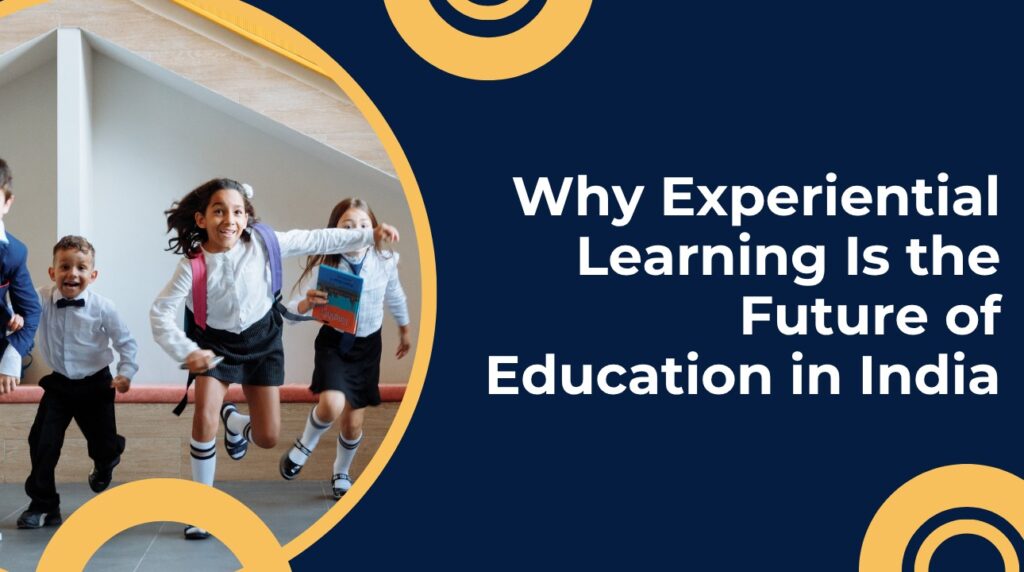
“Tell me and I forget. Teach me and I may remember. Involve me and I will learn.”
Think back to your own school days. Chances are, you still remember the science experiment that fizzed unexpectedly, the history role-play that made you laugh, or the field trip where classroom concepts suddenly came alive. But can you recall every chapter you memorised for an exam?
Probably not.
That’s because experiences create lasting learning.
Today’s children are growing up in a world that values creativity, collaboration, adaptability, and problem-solving as much as academic excellence. Simply memorising facts is no longer enough. Children need opportunities to ask questions, experiment, make mistakes, and discover solutions on their own.
This is why Experiential Learning in India is gaining momentum. It represents a shift from learning to score towards learning to succeed in life.
At Sristi Global School, we believe education should inspire curiosity, build confidence, and prepare every child for the challenges of tomorrow—not just the examinations of today.
What Is Experiential Learning?
Experiential learning is exactly what it sounds like—learning through meaningful experiences.
Instead of only listening to lectures or reading textbooks, students actively participate in their learning journey by:
- Conducting experiments
- Solving real-world problems
- Working on collaborative projects
- Participating in discussions and debates
- Exploring nature and communities
- Reflecting on their experiences
The goal isn’t to replace textbooks but to make learning deeper, more engaging, and more meaningful.
Why Experiential Learning Is the Future of Education in India:
The Future of Education in India is no longer centred solely on academic scores. Employers, universities, and society increasingly value students who can think independently, communicate effectively, and adapt to changing situations.
This shift is also reflected in India’s National Education Policy (NEP) 2020, which encourages competency-based and experiential learning to help students develop practical skills alongside conceptual understanding.
Education is moving from asking:
“Can students remember the answer?”
to asking:
“Can students understand, apply, analyse, and innovate?”
That simple change is shaping the Future of Education in India.
Why Experiential Learning Is Important in India:
India is one of the world’s youngest nations, with millions of students preparing for careers that may not even exist today.
To succeed in such a rapidly changing world, children need much more than subject knowledge.
They need the ability to:
- Think critically
- Adapt to change
- Collaborate with diverse teams
- Solve unfamiliar problems
- Communicate ideas confidently
This is exactly why experiential learning is important in India.
Rather than encouraging children to memorise information temporarily, experiential learning helps them understand concepts deeply and apply them confidently.
The Benefits of Experiential Learning:
Parents often ask, “Will experiential learning improve my child’s academic performance?”
The answer is yes—but its impact goes far beyond marks.
1. Better Conceptual Understanding:
When children actively participate in learning, they understand concepts instead of simply memorising definitions.
For example:
- Measuring a playground helps children understand mathematics.
- Growing a plant makes science lessons meaningful.
- Mock parliamentary debates make civics engaging and memorable.
Learning becomes something children experience—not just study.
2. Stronger Problem-Solving Skills:
Life rarely provides ready-made answers.
Experiential learning encourages students to:
- Analyse situations
- Explore different solutions
- Learn from mistakes
- Improve through reflection
These are the skills that prepare children for higher education and future careers.
3. Greater Confidence:
Children gain confidence when they:
- Present ideas
- Lead projects
- Work in teams
- Make independent decisions
Confidence built through experience often lasts much longer than confidence gained through examination results alone.
4. Improved Communication and Collaboration:
Modern workplaces value teamwork as much as technical knowledge.
Experiential classrooms regularly encourage students to:
- Share opinions respectfully
- Listen actively
- Work collaboratively
- Appreciate different perspectives
These social skills become lifelong strengths.
5. Better Retention of Knowledge:
Educational research consistently shows that children remember concepts better when they actively engage with them rather than passively receive information.
Instead of asking,
“What should I memorise?”
Students begin asking,
“How does this work?”
That curiosity leads to deeper and longer-lasting learning.
How Experiential Learning Looks in Everyday School Life:
Experiential learning doesn’t always require expensive technology or elaborate projects.
Sometimes, it happens through simple yet meaningful activities like:
- Classroom discussions
- Science investigations
- Art integration
- Community awareness projects
- Nature walks
- Group presentations
- STEM challenges
- Role plays
- Problem-solving games
Each activity encourages children to observe, think, question, and reflect.
Experiential Learning and NEP 2020: A Perfect Match
One reason Experiential Learning in India is growing rapidly is because it aligns naturally with the vision of NEP 2020.
The policy encourages schools to:
- Move beyond rote memorisation
- Promote conceptual understanding
- Build competencies
- Encourage creativity and innovation
- Develop communication and critical thinking skills
Experiential learning supports each of these goals, making it an essential part of modern education.
The Future of Experiential Learning in Education:
The Future of experiential learning in education is exciting because it combines the best of traditional values with modern teaching practices.
Future classrooms are likely to include:
- More inquiry-based learning
- Real-world projects
- Interdisciplinary teaching
- Technology used with purpose
- Collaborative learning environments
- Continuous reflection and feedback
The focus will increasingly shift from simply completing the syllabus to preparing students for lifelong learning.
How We Bring Experiential Learning to Life at Sristi Global School:
At Sristi Global School, we believe children learn best when they are actively involved in the learning process.
That’s why we create opportunities for students to:
- Explore concepts through hands-on activities
- Participate in collaborative projects
- Connect classroom lessons with everyday life
- Ask questions without hesitation
- Learn through observation, creativity, and reflection
For us, education isn’t about filling young minds with information. It’s about helping students develop curiosity, confidence, resilience, and a genuine love for learning.
By combining strong academic foundations with meaningful experiences, Sristi Global School prepares children not only for examinations but also for the opportunities and challenges of tomorrow.
What Parents Can Do to Encourage Experiential Learning at Home:
Parents play an equally important role in nurturing experiential learning.
Simple activities can make a big difference:
- Cook together to explore mathematics and science.
- Encourage children to ask “why” and “how.”
- Visit museums, parks, and historical places.
- Allow children to solve age-appropriate problems independently.
- Discuss real-world events together.
- Celebrate effort and curiosity, not just marks.
Learning doesn’t stop when the school day ends—it continues through everyday experiences.
Conclusion: Preparing Children for Life, Not Just Exams
The Future of Education in India belongs to schools that inspire children to think, explore, and create—not simply memorise.
The Benefits of Experiential Learning extend far beyond academic success. It develops confident communicators, thoughtful problem-solvers, resilient learners, and compassionate individuals who are ready for an ever-changing world.
At Sristi Global School, we are proud to embrace experiential learning as an integral part of our educational philosophy. We believe every lesson should spark curiosity, every activity should build confidence, and every child should have the opportunity to discover their unique potential.
If you’re looking for a school where learning goes beyond textbooks and every experience helps shape your child’s future, we invite you to visit Sristi Global School. Meet our educators, explore our learning environment, and see firsthand how experiential learning can inspire your child to become a confident, capable, and lifelong learner.
Enrol today and give your child an education that prepares them not only for the next exam, but for life itself.
FAQs(Frquently Asked Questions):
1. What is Experiential Learning in India?
Experiential Learning in India is an educational approach where students learn through hands-on activities, real-life experiences, projects, discussions, and reflection rather than relying only on rote memorisation.
2. Why is experiential learning important in India?
Experiential learning helps students develop critical thinking, creativity, communication, collaboration, and problem-solving skills, making them better prepared for higher education, careers, and everyday life.
3. What are the Benefits of Experiential Learning?
Some key benefits include:
- Better conceptual understanding
- Higher student engagement
- Improved confidence
- Stronger communication skills
- Better knowledge retention
- Enhanced problem-solving abilities
4. How does experiential learning support NEP 2020?
NEP 2020 encourages competency-based and experiential learning to move beyond rote learning and help students develop practical skills, creativity, conceptual understanding, and critical thinking.
5. What is the Future of experiential learning in education?
The future of experiential learning includes project-based learning, interdisciplinary education, purposeful use of technology, collaborative classrooms, and real-world problem-solving to prepare students for a rapidly evolving world.
6. How does Sristi Global School implement experiential learning?
At Sristi Global School, we integrate experiential learning through hands-on activities, collaborative projects, inquiry-based teaching, and real-world applications that help students develop academically, socially, emotionally, and creatively.
7. Does experiential learning improve academic performance?
Yes. By helping students understand concepts deeply and apply them in practical situations, experiential learning often improves retention, engagement, and overall academic performance while building lifelong learning skills.
1 Comment
[…] in 2026, Emotional Intelligence in the Classroom deserves as much attention as many of the academic skills parents traditionally look for when […]